
INTRODUCING...the AI Deathmatch
There’s a lot of conversation surrounding AI tools right now, and plenty of debate over what they actually mean for the film, advertising, and gaming industries. Our experience with AI can be summed up pretty simply: doing high end production work properly is incredibly hard.
To create real value for clients, you need specialists in the room who can guide the conversation. That's why we’re actively investing the time to stress-test these tools and figure out where the actual value lies.
To force ourselves outside our comfort zones, we have launched an internal initiative called the AI Deathmatch.
The rules are simple: our EP, Nick, throws down a creative brief. Working part-time around active client jobs and our own lives, Jay and Digby’s teams go head to head to see who can deliver the best execution in the following week.
Because these sprints are tight, we aren’t trying to polish every pixel to perfection. It’s a high-stakes (wellll, not that high-stakes) opportunity to put our skills to the test and master some new workflows.
For our very first challenge, Nick threw us into the deep end with a brief called the "Omni-Drive" - a creatively-open, highly-technical automotive showcase. With a few strict parameters in place.
ROUND ONE Brief: OMNI-DRIVE | Luxury Car Commercial
The task was to create a premium, 15-second automotive sequence featuring a seamless, continuous 360-degree tracking shot with environment transitions at every quarter rotation.
In the traditional film world, this requires a massive budget, specialised tracking vehicles, motion-control cranes, a mountain of council permits, and weeks of planning.
In our world, neither path was simple. Both directors quickly realised the raw footage looked incredibly synthetic. To get the required results and deliver on their vision, they had to marry AI generation with traditional VFX, depth maps, and heavy manual compositing. Interestingly, each director took a completely distinct approach.
Jay’s Path: Technical Restraint & Grounded Reality
Jay went with a Range Rover, aiming for the elegant, grounded driving experience the brand is known for.
For his workflow, he built the base camera tracking paths inside Unreal Engine to maintain strict control. He then intentionally injected subtle noise into the camera motion to break up that overly perfect, synthetic AI feel.
Jay also localised the spot for an Australian audience, navigating the vehicle from Sydney's urban sprawl out to the Northern Beaches, before heading further up the coast and into the Daintree.
He spent more hours than he’d like to admit painting out US-centric road lines, wrangling the AI's natural tendency to generate left-hand drive vehicles, and rotoscoping background artifacts to ensure the car complied with local traffic regulations. Much much easier said than done.
*Uploaded in 4K - click the little cog icon above
Digby’s Path: A Surreal Zero-Gravity Epic
Digby went full luxury status symbol, deploying a million-dollar-plus Rolls-Royce.
He used a first and last frame approach, generating eight distinct keyframes to anchor sequence consistency across fast environmental cuts. Conceptually, Digby leaned into a hyper aspirational "Rise Above" theme, defying physics by introducing floating zero gravity particles and an atmospheric, magical narrative.
To bypass native AI resolution limits, Digby split his canvas into multiple separate segments, upscaled each section individually, and meticulously re-stitched them back together to keep fine details like the wheels and the Spirit of Ecstasy in tact.
*Uploaded in 4K - click the little cog icon above
The Limitations
Let’s be completely transparent - because this was a part-time weekly sprint, there are technical flaws we simply didn't have time to fix.
In Jay’s spot, the wheels occasionally suffer from a simulated shutter sync issue, making them look like they’re spinning backward, and his driver subtly warps and shifts in scale between frames. The driver’s clothes also remain identical across different days, and the character model itself is a bit too static. Over on Digby’s side, the zero-gravity elements and environment patches needed heavy manual matting and post-stabilisation that could have been beautifully refined with a longer schedule.
In a live client engagement, every single one of these anomalies is highly fixable through structured geometry models, localised inpainting loops (like ComfyUI), and dedicated cleanup days. But for a rapid R&D sprint, leaving these scars exposed is just part of the learning curve.
The Verdict:
After assessing both submissions, Nick delivered the final judgment: Jay takes Round 1.
While Digby's zero-gravity Rolls-Royce was a visual spectacle - perfectly suited for something you’d see on a Dubai airport superscreen - Jay's Range Rover execution was ultimately more on-brief as a raw, believable proof of concept.
The Brutal Reality of AI Artistry
If there is one major takeaway from this challenge, it’s that the human director is more critical than ever. Learning high-end AI workflows is an incredibly demanding discipline.
Because neural networks rely heavily on random seeds, you cannot troubleshoot with traditional logic or code. Minor prompt adjustments can shatter a working sequence, making the iterative process feel similar to a high-cost gambling scenario where every failed generation pass carries real financial credit costs. True mastery isn't prompt engineering; it's deep editorial curation and workflow intuition.
COMING UP Next…
The creative brief for Deathmatch Round 2 is ‘AAA Game Cinematics’.
The team is tasked with creating high-fidelity, animated video game cinematics (a medium notoriously challenging and time-consuming to execute through traditional workflows).
They must depict the "calm before the storm", using pre-action sequences to showcase deep emotional character performance, intricate facial animation, and complex, atmospheric world-building. All while retaining a real-time cinematic aesthetic.
See you next week.
UNDER THE HOOD
We’ve pulled a few BTS images here from the project Discord channel - there are literally hundreds more to chose from that document the journey.
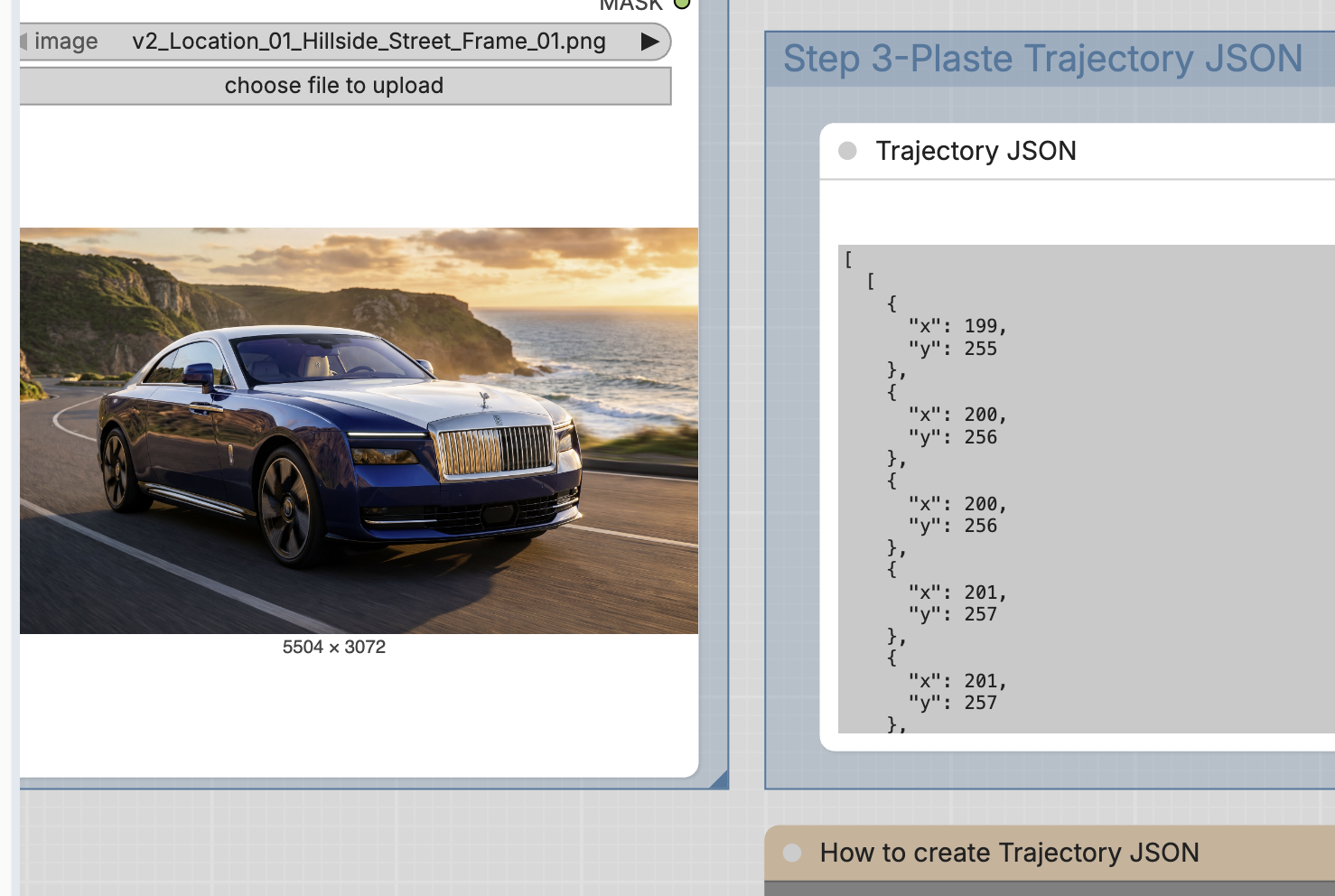
Digby getting his Wan trajectory JSON on
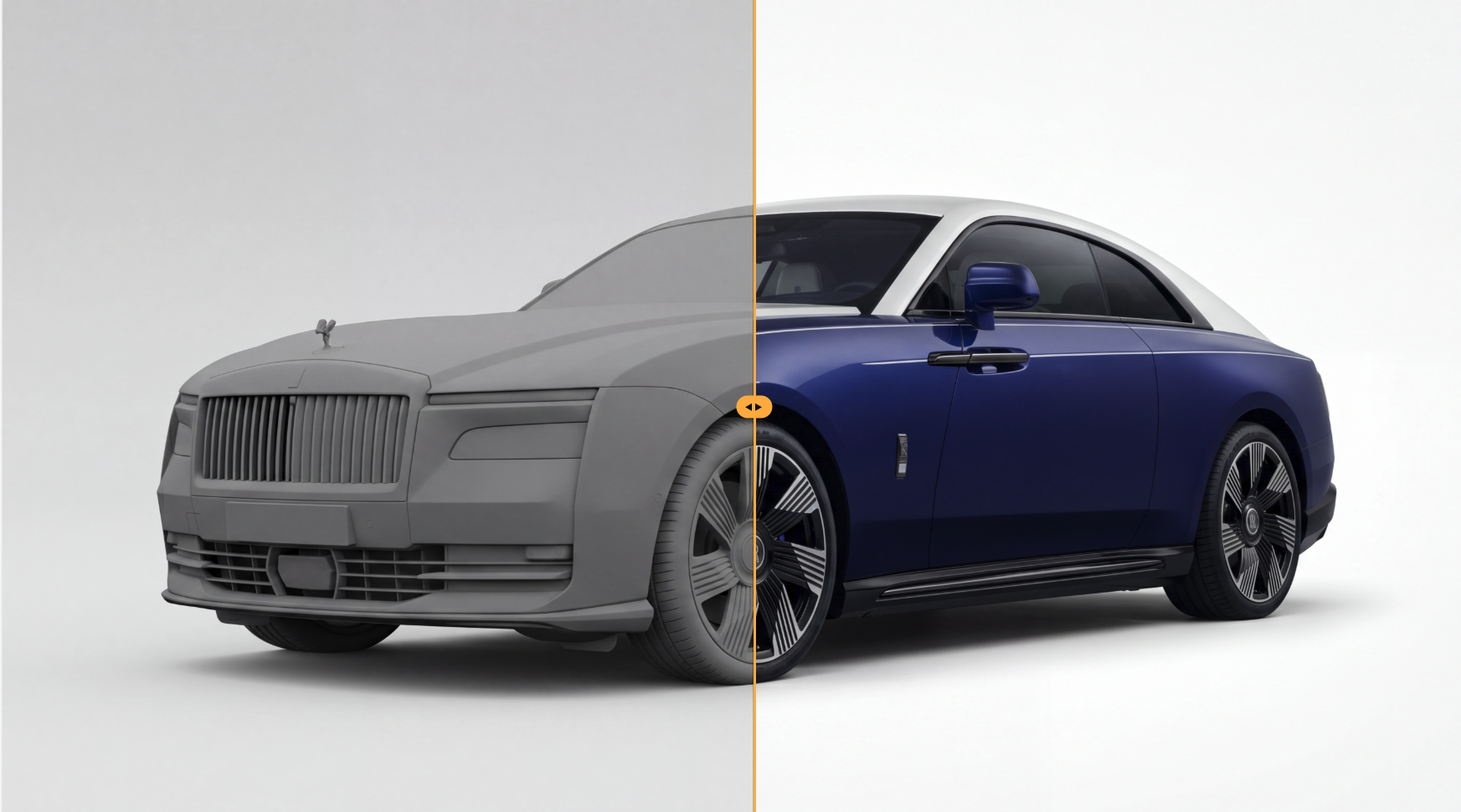
Early stage asset building. Interestingly we found that Rolls Royce image gens got blocked at the system level on average 95% time, which makes Digby’s perservearance all the more impressive
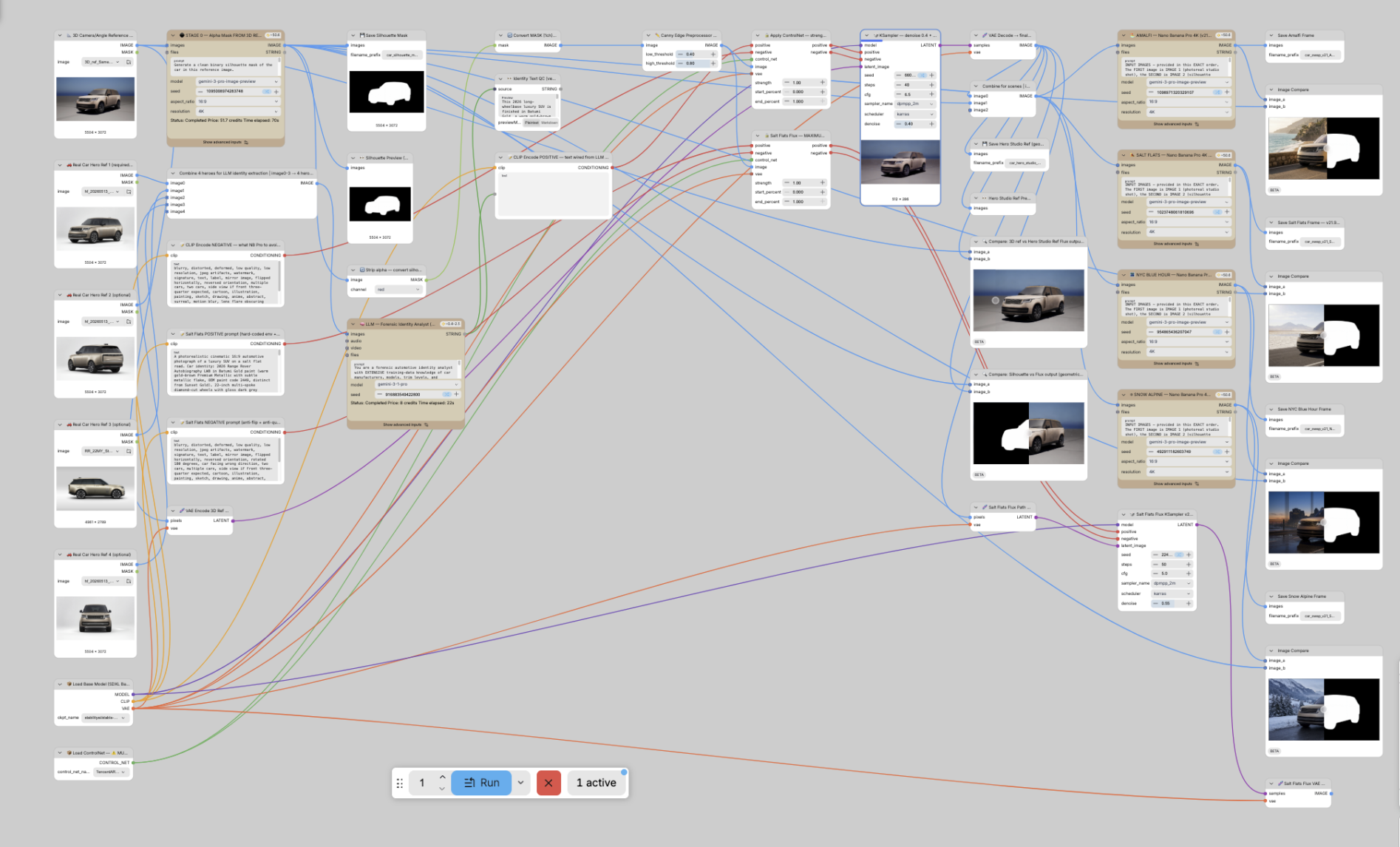
One workflow that never saw the light of day…still, good learning
Jay deployed Unreal Engine in early stages of concept development and camera choreography
As a creative decision, Jay pivoted away from a Toyota Landcruiser execution, deciding this type of cinematography described in the brief was more befitting to a higher end auto brand like Range Rover
Mad that this execution got canned halfway through delivery, in favour of Digby’s more elevated Rise Above execution
Comparison of alpha matte to 3D image ref from Unreal